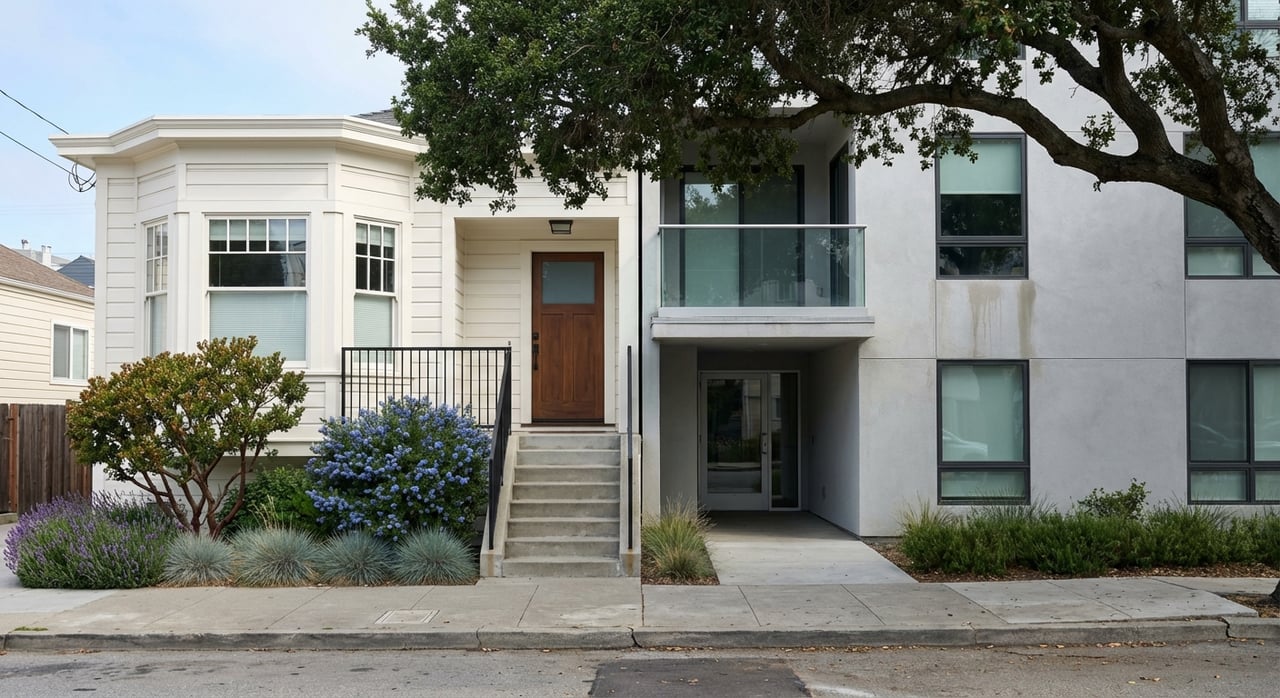
Trying to decide between a condo or a house in San Francisco can feel like a coin toss when both options come with high price tags and unique tradeoffs. You want a smart move that fits your budget today and your lifestyle for years. In this guide, you’ll compare costs, financing hurdles, building rules, and day‑to‑day living so you can choose with confidence. Let’s dive in.
San Francisco prices at a glance
Recent market snapshots show single‑family homes selling at a notable premium to condos. City medians have hovered around the low $1 millions for condos and the mid‑$1 millions for single‑family homes in late 2025 and early 2026. Tight inventory has kept competition brisk in many neighborhoods. Some luxury corridors still see homes sell at or over list, while many condos track closer to asking price, which can influence your negotiating approach. You can see this pattern in recent neighborhood reporting from the San Francisco Chronicle that highlights premium single‑family activity in high‑end areas like Pacific Heights (San Francisco Chronicle coverage).
Bottom line: condos often offer a lower entry price, while single‑family homes command a premium for land and privacy.
What drives your monthly payment
When you compare a condo to a house, line up the same cost categories side by side.
Property taxes
- California’s Prop 13 sets a base property tax rate of about 1 percent of assessed value, with limited annual increases. San Francisco adds parcel taxes and voter‑approved assessments on top. Learn how assessed value and bills work from the City’s Assessor resources (how assessed value works).
HOA dues for condos
- HOA dues vary widely. A smaller, low‑amenity building may charge only a few hundred dollars per month. Amenity‑rich high‑rises often run many hundreds to more than a thousand per month. Ask what dues include, whether reserves are adequately funded, and whether special assessments are planned. Always request the HOA budget, the 20‑year reserve study, the last 12 months of meeting minutes, insurance details, and a list of recent or upcoming assessments.
Insurance differences
- Condo owners typically carry an HO‑6 policy that covers interiors, personal property, liability, and loss‑assessment coverage. The association carries a master policy for the building, and the master policy type and deductible matter because owners can be assessed their share after a claim (HO‑6 overview).
- Single‑family owners typically carry full homeowners coverage, then consider separate earthquake insurance. The California Earthquake Authority explains coverage options and mitigation resources (California Earthquake Authority).
Maintenance and capital repairs
- With a house, you are responsible for exterior systems, roof, foundation, and the lot. A common planning rule is to set aside about 1 percent of home value per year as a starting maintenance allowance. Actual needs vary by age, condition, and complexity.
- With a condo, many large capital items are shared and funded through reserves. If reserves are underfunded or a major repair hits, owners can face special assessments.
Financing considerations for condos
Condo loans can hinge on building‑level eligibility. Agency purchasers review a project’s reserves, investor concentration, dues delinquency, and critical repairs. If a project is flagged, financing can be slower or limited to certain loan types. Have your lender check project eligibility early so you are not surprised mid‑escrow (Freddie Mac Condo Project Advisor).
If you are exploring down payment help, San Francisco’s Mayor’s Office of Housing and Community Development offers Downpayment Assistance Loan Programs, including targeted options for first responders and educators. These deferred second loans can reach significant amounts for qualified buyers. Check MOHCD for current program rules, lottery timelines, and application windows (MOHCD downpayment assistance).
San Francisco rules that can affect costs
- Soft‑story seismic retrofits: San Francisco’s Mandatory Soft Story Retrofit Program applies to certain multiunit wood‑frame buildings. Outstanding retrofit orders or open DBI notices can affect financing and resale, and may lead to substantial assessments. Review DBI records as part of due diligence (soft‑story program overview).
- Assessed value and parcel taxes: Review the Assessor’s and Treasurer’s resources to understand how assessments and parcel taxes will shape your annual bill (about assessed value and tax bills).
Where each home type is common
While every block is unique, you will generally find:
- Condo‑heavy areas: Downtown and the Financial District, SoMa including South Beach and Mission Bay, parts of Hayes Valley, and several hilltop or classic mid‑rise pockets in Nob Hill and Russian Hill. You will also see mixed options near the Mission and Lower Haight.
- House‑heavy areas: Noe Valley, the Richmond District, the Sunset District, Sea Cliff, West of Twin Peaks neighborhoods such as Forest Hill and St. Francis Wood, and parts of Pacific Heights.
Use these patterns to map tours that match your needs for space, yard, parking, or amenities.
A simple decision framework
Use this quick, step‑by‑step worksheet before you start touring.
Step 1: Financial floor test
- Identify a realistic price range for both options in your target neighborhoods. Compare a condo and a single‑family home that both meet your bedroom and space needs.
- Estimate monthly totals using this structure:
- Mortgage principal and interest: based on your down payment, loan type, and current rate.
- Property taxes: about 1 percent of price per year, divided by 12, plus local assessments.
- Insurance: HO‑6 for condos, HO‑3 style homeowners for houses, and consider earthquake coverage.
- HOA dues for condos, or a maintenance allowance for houses. As a starting point for houses, set aside around 1 percent of value per year, then refine based on condition and inspections.
Worked example using recent medians as placeholders, numbers will change:
- Condo at $1.07M
- Property tax baseline: about $10,700 per year, or roughly $892 per month, plus local assessments.
- HOA dues: insert the actual building’s dues. Many mid‑rise or high‑rise buildings run several hundred to more than a thousand per month.
- Insurance: HO‑6 policy, plus consider loss‑assessment coverage.
- Single‑family at $1.66M
- Property tax baseline: about $16,600 per year, or roughly $1,383 per month, plus local assessments.
- Maintenance allowance starting point: about $16,600 per year, or roughly $1,383 per month, then adjust using inspection findings.
- Insurance: homeowners policy, and consider separate earthquake coverage.
Tip: Ask your lender to plug exact principal and interest for each scenario so you can compare true apples to apples.
Step 2: Lifestyle filter
- Do you need private outdoor space, a garage, or extra storage for gear or pets? If yes, a single‑family home may fit better unless a condo explicitly provides those features.
- Do you prefer convenience, lower day‑to‑day maintenance, and in‑building amenities like a gym or concierge? If yes, a condo often fits well. Review a simple pros and cons primer to frame your thinking (condo pros and cons overview).
Step 3: Due diligence checklist for condos
- Request: HOA budget, 20‑year reserve study, last 12 months of meeting minutes, master‑policy insurance declarations and deductible, current or planned special assessments, owner‑occupancy rate, and a litigation statement.
- Ask your lender to confirm the building’s project‑level eligibility early (Freddie Mac Condo Project Advisor).
- Learn why healthy reserves matter and how boards plan capital projects (reserve funding basics).
Step 4: Due diligence checklist for single‑family homes
- Pull DBI records for open permits, violations, or soft‑story retrofit orders where applicable (soft‑story program).
- Order inspections that focus on foundation, structure, and seismic elements.
- Review parcel‑level taxes and assessment districts using City resources (assessed value basics).
When a condo makes sense
- You want a lower entry price and value building amenities.
- You prefer predictable upkeep, even if HOA dues are higher.
- You are comfortable with shared walls and common areas.
- You will confirm project‑level loan eligibility and the HOA’s reserve health before offering.
When a house makes sense
- You need private outdoor space, more storage, or a garage.
- You want control over improvements and maintenance schedules.
- You can handle variable upkeep and set aside funds for capital items.
- You value privacy and the long‑term appeal of land.
Your next step
Choosing between a condo and a house in San Francisco is not just about price. It is about fit. If you want a calm, local advisor to help you model monthly costs, confirm building eligibility, and align financing with the right property, our family team is here to help. We bundle expert buyer representation with integrated mortgage guidance so your search and your loan stay in sync. Reach out to Now Homes to compare scenarios tailored to your goals.
FAQs
What is the typical price gap between SF condos and houses?
- Recent snapshots show condos around the low $1 millions and single‑family homes in the mid‑$1 millions, reflecting a several‑hundred‑thousand‑dollar gap that affects down payment and monthly costs.
How do HOA dues change condo affordability?
- HOA dues add a recurring cost that can range from a few hundred to more than a thousand dollars per month depending on amenities. Review the HOA budget, reserves, and any special assessments before you offer.
Do I need earthquake insurance for a house or condo in SF?
- Earthquake coverage is separate from standard homeowners or HO‑6 policies. The California Earthquake Authority explains coverage options and mitigation resources so you can weigh the added cost (CEA overview).
Can I use down payment assistance for a condo or a house in San Francisco?
- Yes, if you qualify. The City’s down payment assistance programs can provide substantial deferred loans. Check MOHCD for current rules, lottery dates, and application windows (program details).
How do I check if a building has a soft‑story retrofit requirement?
- Search the Department of Building Inspection’s soft‑story resources and building records. Outstanding retrofit orders or open notices can affect financing and resale (soft‑story program).
Why are some San Francisco condos harder to finance?
- Lenders review the entire project. High investor ratios, low reserves, delinquent dues, or critical repairs can limit loan options or slow approvals. Have your lender confirm eligibility early (Freddie Mac resource).