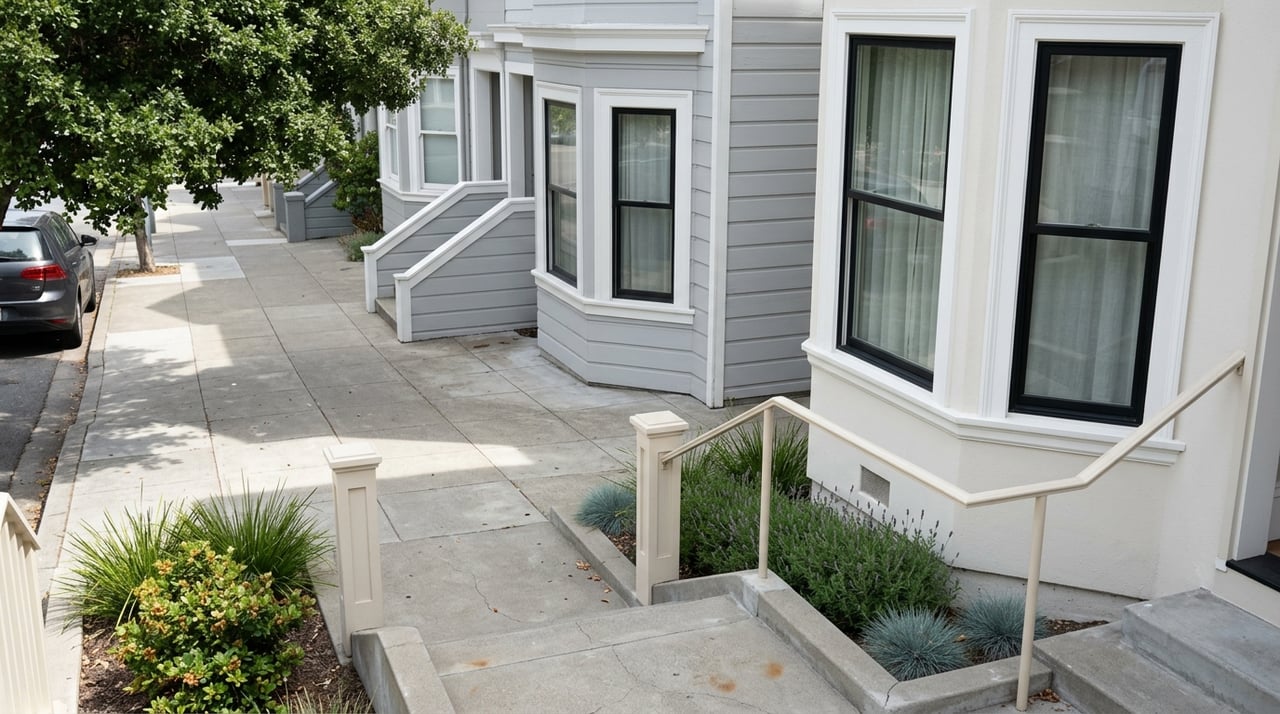
Looking for a quieter side of San Francisco? You are not alone. Many buyers want a neighborhood that feels more residential day to day, with calmer streets, nearby parks, and local shopping close at hand, without feeling cut off from the rest of the city. The good news is that San Francisco has several areas often associated with that balance. Let’s dive in.
What “relaxed residential” means in San Francisco
In San Francisco, neighborhood lines are not official in the way many people expect. SF Planning notes that it uses 37 distinct neighborhoods for notification purposes, so it is best to think in terms of commonly recognized areas, blocks, and commercial corridors rather than hard boundaries.
For this reason, a “relaxed residential feel” is not a formal category. It is a practical way to describe places that often have lower-rise housing, more neighborhood-serving retail, and a street pattern that feels more residential than downtown-like. In many parts of the city, that character also comes from cohesive architecture and consistent block patterns, as described in San Francisco’s Residential Design Guidelines.
West Portal and West of Twin Peaks
West Portal is one of the clearest examples of a neighborhood-scaled commercial area set within a largely residential setting. SF Planning describes West Portal Avenue as a small-scale, family-oriented district serving surrounding west-of-Twin-Peaks and Sunset single-family neighborhoods, with planning controls intended to preserve a village character and support mostly neighborhood-serving retail.
That matters if you want everyday convenience without the intensity of a large entertainment corridor. You can picture a compact main street feel, then nearby blocks that read much more like residential San Francisco. The district’s lower-scale framework, including a 26-foot height cap in the planning documents, helps reinforce that character.
Another part of the appeal is that this area still connects well to the rest of the city. It does not feel isolated, even though it can feel more relaxed than denser mixed-use districts. For outdoor space, West Portal Grass Area adds another neighborhood-focused amenity nearby.
Glen Park’s village feel
Glen Park is often described in terms that fit this topic especially well. According to the Glen Park Community Plan, the neighborhood has a village center around Diamond and Chenery Streets, with local shops, cafes, the library, and BART close together.
The same plan points to Glen Park’s small-town charm, winding streets, and human-scaled built environment. That combination can appeal to buyers who want a neighborhood with personality and convenience, but not a highly urban street experience on every block.
Glen Park also shows that residential calm does not have to mean poor access. The plan states that more than 9,000 riders use Glen Park BART each day, and about 75 percent arrive by walking or public transit. In other words, you can find a quieter feel here while still staying well connected.
Open space is part of the story too. Glen Canyon Park is a 66.6-acre recreation area with trails, wildflower displays, and Islais Creek, giving the area a natural feature that stands out even within a city known for strong park access.
Noe Valley’s everyday convenience
Noe Valley is another area commonly associated with a comfortable residential rhythm. SF Planning describes 24th Street as a daytime-oriented, multi-purpose commercial district serving a predominantly local market area, with regulations designed to protect its small-scale mixed-use character and limit traffic, congestion, noise, and late-night activity.
That description helps explain why Noe Valley often feels so livable to people who want errands and services nearby. You get a local commercial corridor that supports daily routines, while many surrounding blocks still feel residential rather than intensely urban.
For buyers, this can mean a practical blend of access and atmosphere. You are not choosing between total quiet and total convenience. Instead, you may find both in a neighborhood pattern that supports daily life in a more measured way.
Inner Sunset and Outer Sunset
The Sunset is important to this conversation because of its scale and housing character. According to SF Planning’s preservation material, the Sunset is the city’s largest neighborhood at about 4.5 square miles, and many parts of it have a more spread-out, low-rise feel than the city’s denser cores.
The Sunset historic context survey also notes that much of the area developed from 1925 to 1950 with similarly massed single-family homes and integrated garages. That history helps explain the consistent streetscapes you notice on many blocks.
In the Inner Sunset, SF Planning describes the shopping area as providing convenience goods and services to local residents while protecting its mixed residential-commercial character and existing housing. That makes it a good fit for people who want neighborhood services nearby without giving up a residential atmosphere.
In the Outer Sunset, the Taraval Street district is described as small-scale, mostly independently owned, and surrounded by nearby one- and two-family houses. Planning controls there are intended to preserve neighborhood-serving uses and adjacent residential livability. Together, these details make the Sunset a strong example of how San Francisco can feel residential, connected, and architecturally cohesive at the same time.
Richmond and the Clement corridor
The Richmond District also deserves a place on this list. In particular, SF Planning frames the Inner Clement district as a convenience-and-services corridor for nearby residents, with a strong pedestrian character.
That is a useful pattern if you are searching for a neighborhood with a lively commercial spine that still feels local in scale. You can have activity where it is helpful, like dining, errands, and services, while many surrounding residential blocks maintain a calmer day-to-day feel.
As with the other areas in this article, the best way to think about the Richmond is through its corridor-plus-blocks dynamic. A neighborhood can be active in spots and still feel residential overall.
Why some areas feel more residential
A lot of San Francisco’s residential character comes from built form, not just noise levels or traffic patterns. SF Planning’s design guidance notes that housing across the city ranges from Victorians to stucco-clad homes in the Sunset and newer infill buildings, and those repeating forms shape how a block feels.
In places like the Sunset, similar massing and low-rise homes create visual consistency. The preservation survey identifies styles such as barrel-front Mediterranean Revival, Spanish Colonial Revival, Tudor Revival, Storybook, French Provincial, and Streamline Moderne. Even when homes are not identical, that consistency can make a street feel settled and cohesive.
This is one reason buyers often respond so strongly to certain blocks. The feeling is not just about one home. It is also about the rhythm of the street, the scale of the buildings, and how the corridor around the corner supports everyday life.
Parks and access matter too
Residential feel does not mean sacrificing convenience. Citywide, San Francisco Recreation and Parks says it manages more than 230 parks, playgrounds, and open spaces, and that every resident lives within a 10-minute walk of a park.
That broader context matters when you are comparing neighborhoods. Park access is not limited to one part of the city, but certain areas pair that access with lower-rise housing and neighborhood-scaled retail in a way that many buyers find especially appealing.
The key is balance. Some neighborhoods commonly described as more relaxed still include active transit stops, shopping streets, and local destinations. In fact, that combination is often exactly what makes them work so well for daily life.
How to explore these neighborhoods well
If you are trying to decide which San Francisco neighborhood feels right for you, it helps to go beyond the name on the map. Because boundaries can vary by source, your experience may depend more on a few specific blocks and nearby corridors than on the neighborhood label itself.
As you explore, pay attention to:
- The scale of the homes and buildings on nearby blocks
- Whether retail feels neighborhood-serving or more destination-driven
- Access to transit for your typical routine
- Nearby parks and open space
- How active the area feels during the day versus evening
- Whether the streetscape feels consistent from block to block
This approach gives you a more realistic sense of day-to-day life. It also helps you focus on fit, rather than chasing a simplified ranking.
If you are weighing where to buy or preparing to sell in one of these areas, working with a local team can help you read the micro-differences between similar-looking neighborhoods. At Now Homes, we help buyers and sellers navigate San Francisco with a practical, neighborhood-focused approach, from property search and pricing strategy to staging, marketing, and financing coordination.
FAQs
Which San Francisco neighborhoods are often associated with a relaxed residential feel?
- Areas commonly described this way include West Portal, Glen Park, Noe Valley, parts of the Inner and Outer Sunset, and parts of the Richmond, especially around neighborhood-scaled commercial corridors.
Does San Francisco have official neighborhood boundaries?
- No. SF Planning uses neighborhoods for notification purposes, but boundaries can vary by source, so it is often more accurate to talk about blocks, corridors, and commonly recognized areas.
What makes a San Francisco neighborhood feel more residential?
- Common factors include lower-rise housing, consistent streetscapes, neighborhood-serving retail, nearby parks, and commercial corridors that support daily errands without the intensity of major urban districts.
Is Glen Park a quiet but connected San Francisco neighborhood?
- Glen Park is often seen as a good example of that balance because its village center is close to shops, cafes, the library, and BART, while the neighborhood plan also describes a human-scaled environment and winding residential streets.
Why does the Sunset feel more residential in many areas?
- The Sunset’s size, low-rise character, and many similarly massed homes built during the 1925 to 1950 period help create a cohesive residential streetscape across many blocks.
How should you compare San Francisco neighborhoods if you want a calmer feel?
- It helps to visit at different times of day and focus on specific blocks, nearby shopping streets, transit access, parks, and overall building scale instead of relying only on neighborhood names.